
You have a solid app idea and a business to back it. What you don't have is a clear number — and every developer you've approached has given you a different one. If you're a business owner in Saudi Arabia, the UAE, or Qatar, understanding mobile app development cost is the first real decision you need to make. This guide gives you the numbers, the context, and the questions to ask before you commit.
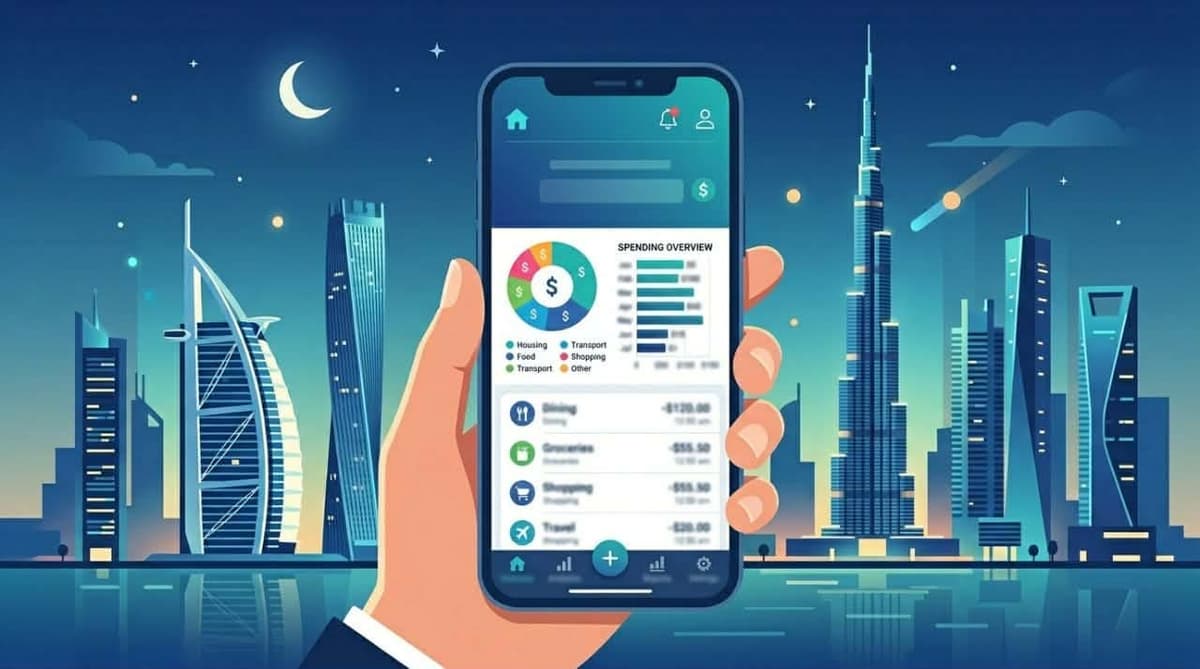
What Drives Mobile App Development Costs?
Mobile app development cost is not a fixed number — it's the sum of dozens of decisions. Three variables account for most of the variance: platform choice, feature complexity, and where your development team is based.
Platform — Building for a single platform (iOS or Android) costs 30–40% less than building for both. Cross-platform frameworks like Flutter and React Native close this gap significantly, letting one codebase run on both systems. For most Gulf startups and SMEs, this is the right default.
Complexity — A simple informational app is a different product — and a different budget — from a marketplace with real-time inventory, in-app payments, and push notifications. Features that add the most cost include real-time data sync, third-party API integrations (payment gateways, CRMs), custom admin dashboards, and Arabic RTL layouts.
Team location — North American and Western European agencies typically charge $100–$200/hour. Development companies in the Arab world — Syria, Jordan, Egypt — offer competitive rates in the $25–$60/hour range without the time-zone and communication friction of outsourcing to Asia. At Apex, we work with Gulf clients directly, combining regional market knowledge with technically skilled teams.
Mobile App Development Cost Breakdown for the Gulf Market (2026)
A basic mobile app in the Gulf region typically costs between $8,000 and $25,000 USD. More capable, backend-driven apps range from $25,000 to $80,000, while enterprise-grade platforms can exceed $120,000.
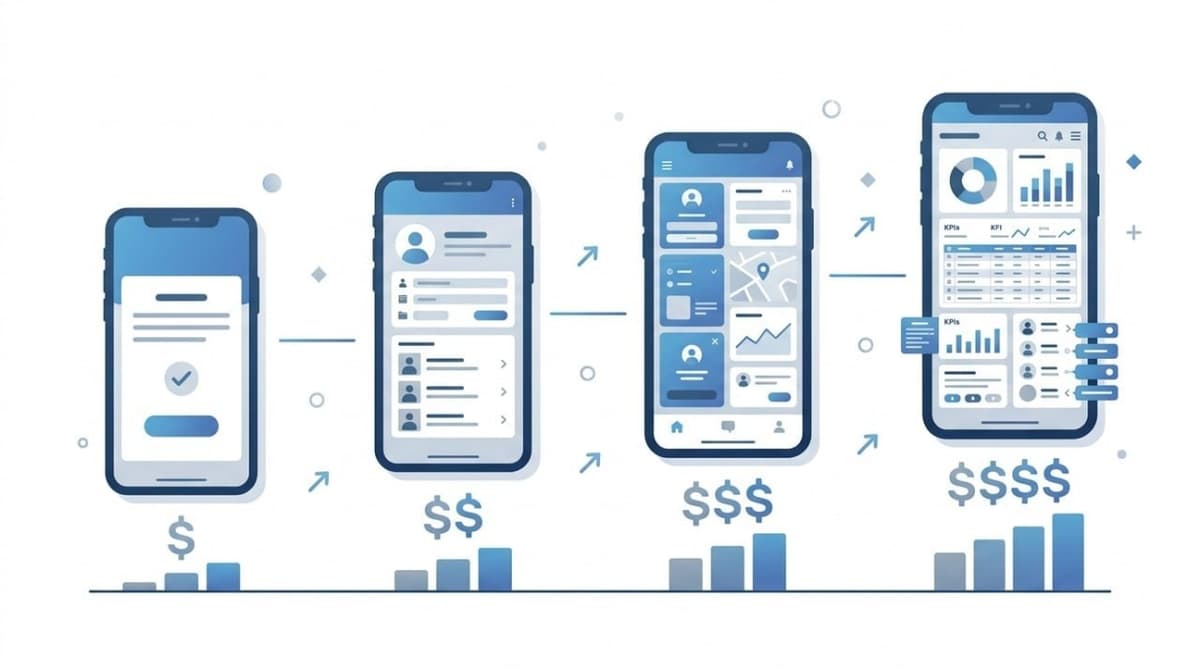
| App Type | Complexity | Estimated Cost (USD) | Timeline |
|---|---|---|---|
| MVP / Basic App | Low — 3–6 screens, minimal backend | $8,000 – $25,000 | 6–10 weeks |
| Mid-Range App | Medium — auth, API integrations, CMS | $25,000 – $60,000 | 3–5 months |
| Complex App with Backend | High — real-time features, custom admin, analytics | $60,000 – $120,000 | 5–9 months |
| Enterprise App | Very High — multi-role, ERP integrations, high-volume | $120,000+ | 9–18 months |
According to Clutch, the average cost to build a mobile app ranges from $30,000 to $150,000 globally, with complexity being the primary pricing variable. Gulf market projects sit within this range but carry additional cost factors unique to the region.
What Gulf Projects Cost More — and Why
Building an app for the Gulf is not the same as building a generic app and translating it. Three regional requirements consistently add budget that global estimates don't account for.
Arabic localization goes beyond translation. Arabic is a right-to-left language requiring mirrored UI layouts, custom font rendering, and RTL testing across device sizes. Proper localization adds $2,000–$8,000 depending on whether RTL was considered from the design stage — or retrofitted later.
Payment gateway integration in Saudi Arabia, the UAE, and Qatar means connecting to Mada, STC Pay, and Apple Pay. Each gateway has its own API, sandbox environment, and compliance process. Budget $1,500–$5,000 per gateway. Also factor in App Store fees: Apple charges $99/year, Google a one-time $25.
Regulatory compliance varies by sector. Healthcare apps in the UAE must align with DHA guidelines. Fintech in Saudi Arabia falls under SAMA. E-commerce platforms handling personal data must comply with Saudi Arabia's PDPL. Ignoring these requirements doesn't save money — it moves the cost to post-launch, where fixes are far more expensive.
How to Reduce Costs Without Sacrificing Quality
The right decisions at the start of a project can reduce mobile app development cost by 30–50% without cutting what matters.
Start with an MVP. Launch the core workflow that solves your primary user problem — nothing more. You reach the market faster, validate with real users, and fund the next phase from actual traction rather than assumptions.
Choose Flutter. (For the full framework comparison see Flutter vs React Native.) Flutter produces native-quality iOS and Android apps from one codebase, has strong RTL support for Arabic, and reduces development time by 30–40% compared to separate native builds. It's our default recommendation for most Gulf business apps. See our mobile app development services for how we scope projects using Flutter.
Scope before you budget. Most budget overruns happen because requirements weren't defined upfront. A proper scope documents features, platforms, integrations, and compliance needs before a single line of code is written. You can review examples of how we've applied this in our project portfolio.
A Real Example from Our Work

A logistics company in the UAE came to us needing a driver-facing app with real-time GPS tracking, Arabic UI, and Mada payment integration. Their initial budget expectation was $20,000 — but proper scoping put the full build at $48,000. We proposed a phased approach: Flutter-based MVP in 10 weeks at $27,000, with the admin dashboard delivered in phase two. The app was processing live deliveries before phase two began. Total investment across both phases: $43,000 — below the original full-scope estimate, with a revenue-generating product in market after week ten. The main cost drivers were the GPS sync architecture and an RTL redesign caused by initial designs being built left-to-right.
Frequently Asked Questions
How much does it cost to build a mobile app in Saudi Arabia in 2026?
Mobile app development cost in Saudi Arabia ranges from $8,000 for a basic MVP to over $120,000 for a complex enterprise platform. Most mid-market business apps with Arabic support and payment integration fall between $25,000 and $60,000 USD.
What is the average app development cost in the UAE?
Comparable to Saudi Arabia — expect $20,000–$70,000 for a standard business app. Projects involving DIFC or ADGM-regulated services may carry additional compliance costs.
How long does it take to build a mobile app in the Gulf?
A well-scoped MVP takes 6–10 weeks. A mid-range app with backend integrations takes 3–5 months. Enterprise platforms run 9–18 months. Scope changes mid-project are the most common cause of delays.
Is Flutter a good choice for Gulf market apps?
Yes. Flutter offers strong Arabic RTL support, produces native-quality apps on iOS and Android from one codebase, and has a mature ecosystem for Gulf payment gateway integrations. It's the most cost-effective framework for most Gulf business apps.
What general factors determine the price of any app?
This guide focuses on Gulf-market specifics. For the underlying pricing factors in general terms — screen count, platform choice, backend complexity, and post-launch costs — see our comprehensive guide: mobile app development cost in 2026.
How do I get an accurate quote for my app idea?
Request a scoped assessment — not a ballpark based on a one-line description. A proper scope documents features, platforms, integrations, and compliance requirements. At Apex, we provide free, no-obligation scope assessments for Gulf businesses ready to move forward.
Read also
- App development company in Riyadh — how to pick a partner in the Saudi market.
- App development in Jeddah — the western region's pricing and options.
- App development in Abu Dhabi — pricing and selection in the UAE.
- Software company in Qatar — selection criteria for the Qatari market.
- Payment gateways in the Gulf — Mada, STC Pay, Tabby, and Tamara.
- App development contracts — the clauses that protect you before signing.
- MVP or full product? — how to cut the initial cost intelligently.
Ready to put a real number on your app idea? Share your concept with us and we'll give you a free, no-obligation scope assessment — no sales pressure, just clarity. Get in touch with Apex. You can also browse our previous work and mobile app development services.